

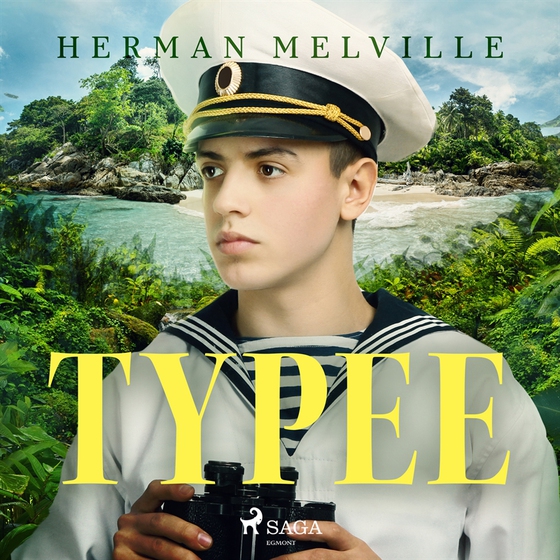
Herman Melville
(författare)
,
Michael Scherer
(berättare)
Typee ljudbok
99 kr
Typee; in full: Typee: A Peep at Polynesian Life) is American writer Herman Melville's first book, a classic in the literature of travel and adventure partly based on his actual experiences as a captive on the island Nuku Hiva (which Melville spelled as Nukuheva) in the South Pacific Marquesas Islands, in 1842. The title comes from the name of a valley there called Tai Pi Vai. It was Melville's m…
Typee; in full: Typee: A Peep at Polynesian Life) is American writer Herman Melville's first book, a classic in the literature of travel and adventure partly based on his actual experiences as a captive on the island Nuku Hiva (which Melville spelled as Nukuheva) in the South Pacific Marquesas Islands, in 1842. The title comes from the name of a valley there called Tai Pi Vai. It was Melville's most popular work during his lifetime, but made him notorious as the "man who lived among the cannibals." For 19th century readers, his career seemed to decline afterward, but during the early 20th century it was seen as the beginning of a career that peaked with Moby-Dick (1851).
Ljudbok
99 kr
Förlag
Saga Egmont
Längd
11:34
Genrer
Skönlitteratur, Romaner
Språk
English
Format
mp3
Kopieringsskydd
Vattenmärkt
ISBN
9789176391730
Typee; in full: Typee: A Peep at Polynesian Life) is American writer Herman Melville's first book, a classic in the literature of travel and adventure partly based on his actual experiences as a captive on the island Nuku Hiva (which Melville spelled as Nukuheva) in the South Pacific Marquesas Islands, in 1842. The title comes from the name of a valley there called Tai Pi Vai. It was Melville's most popular work during his lifetime, but made him notorious as the "man who lived among the cannibals." For 19th century readers, his career seemed to decline afterward, but during the early 20th century it was seen as the beginning of a career that peaked with Moby-Dick (1851).
Inga recensioner än