

Angelica Haverblad
(författare)
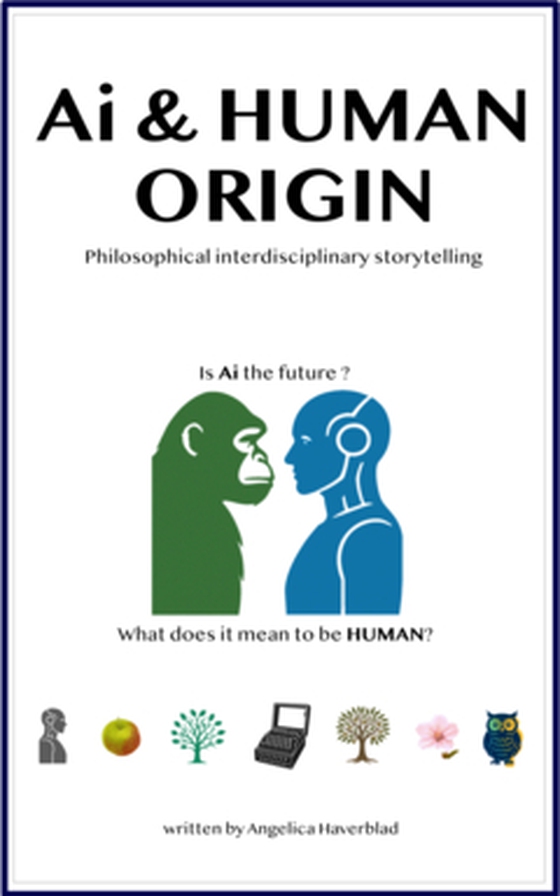
Ai & Human Origin e-bok
75 kr
Consider the possibility that the “imitation game” as it was proposed by the British computer scientist Alan Turing has been misinterpreted as a measure of machine intelligence. When instead, its deeper purpose might have been to challenge humans: to reflect on how much of human intelligence is real, and how much is learned imitation. In this light, the real test isn’t whether machines can imitat…
Consider the possibility that the “imitation game” as it was proposed by the British computer scientist Alan Turing has been misinterpreted as a measure of machine intelligence. When instead, its deeper purpose might have been to challenge humans: to reflect on how much of human intelligence is real, and how much is learned imitation. In this light, the real test isn’t whether machines can imitate humans, but whether humans already become like machines.
Among the inquiries explored:
• Is Ai the future?
• What is consciousness?
• Do humans have free will?
• What does it mean to be human?
• Is humanity chasing its own shadow?
• Why does “everything come from Greek”?
• Why didn't Pythagoras coin the word “philosopher”?
• Why has humanity “barely survived their self's”?
• Why were the Roman statesman Cicero's secretary
Tiro working for the secret service?
The storytelling is interdisciplinary, blending science, history, myth, and linguistics. Playful with language and philosophical musings, sprinkled with irony, explores human nature with reflection and curiosity, illustrating abstract concepts through historical and cultural examples. It invites readers to think critically and draw their own conclusions rather than offering definitive ones.
About Angelica Haverblad
Angelica brings philosophic depth and a human-centric perspective, exploring how cognition and language shape understanding, decoding humanity in the age of Ai. With a background as a recognised author and IT specialist, she is bridging technological insight and human transformation.
E-bok
75 kr
Undertext
Philosophical interdisciplinary storytelling
Förlag
Semantic Minds
Utgiven
29.06.2026
Längd
39 sidor
Genrer
Samhälle Och Politik, Filosofi Och Religion, It & Teknologi, Psykologi Och Pedagogik
Språk
English
Format
epub
Kopieringsskydd
Vattenmärkt
ISBN
9789153197904
Consider the possibility that the “imitation game” as it was proposed by the British computer scientist Alan Turing has been misinterpreted as a measure of machine intelligence. When instead, its deeper purpose might have been to challenge humans: to reflect on how much of human intelligence is real, and how much is learned imitation. In this light, the real test isn’t whether machines can imitate humans, but whether humans already become like machines.
Among the inquiries explored:
• Is Ai the future?
• What is consciousness?
• Do humans have free will?
• What does it mean to be human?
• Is humanity chasing its own shadow?
• Why does “everything come from Greek”?
• Why didn't Pythagoras coin the word “philosopher”?
• Why has humanity “barely survived their self's”?
• Why were the Roman statesman Cicero's secretary
Tiro working for the secret service?
The storytelling is interdisciplinary, blending science, history, myth, and linguistics. Playful with language and philosophical musings, sprinkled with irony, explores human nature with reflection and curiosity, illustrating abstract concepts through historical and cultural examples. It invites readers to think critically and draw their own conclusions rather than offering definitive ones.
About Angelica Haverblad
Angelica brings philosophic depth and a human-centric perspective, exploring how cognition and language shape understanding, decoding humanity in the age of Ai. With a background as a recognised author and IT specialist, she is bridging technological insight and human transformation.
Inga recensioner än