

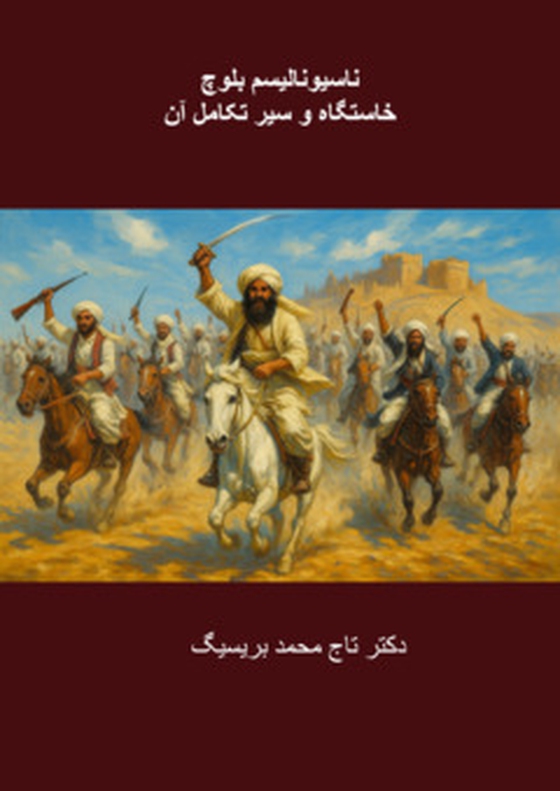
Taj Mohammad Breseeg
(författare)
Nationalisme baloch e-bok
239 kr
This book, originally in English and now translated into Persian, is a revised version of a PhD
dissertation discussing the “Origin and Development of Baloch Nationalism.” It examines
theoretical writings on the subject and concludes that nationalism is a shared sense of
identity among people linked by civic-territorial or linguistic-ethnic bonds, along with the
belief that their collective inter…
This book, originally in English and now translated into Persian, is a revised version of a PhD
dissertation discussing the “Origin and Development of Baloch Nationalism.” It examines
theoretical writings on the subject and concludes that nationalism is a shared sense of
identity among people linked by civic-territorial or linguistic-ethnic bonds, along with the
belief that their collective interests are best protected through self-rule. The central theme
revolves around two questions: (1) Does a Baloch nationality exist with a developed national
consciousness and distinctive characteristics? (2) If so, is this consciousness, along with the
determination to preserve their identity and pursue self-government, strong enough to
constitute a Baloch national movement? The book fills a gap in knowledge about Baloch
nationalism in Pakistan and Iran, exploring its development from the 1920s to the 1980s.
Through a historical and comparative approach using primary and secondary sources, it
analyses the foundations, evolution, dynamics, and implications of Baloch nationalism.
E-bok
239 kr
Undertext
Khastgah va seire takamole an
Förlag
Balochi
Utgiven
03.08.2025
Längd
603 sidor
Genrer
Samhälle Och Politik, Fackböcker
Språk
Persian
Format
epub
Kopieringsskydd
Vattenmärkt
ISBN
9789181116502
This book, originally in English and now translated into Persian, is a revised version of a PhD
dissertation discussing the “Origin and Development of Baloch Nationalism.” It examines
theoretical writings on the subject and concludes that nationalism is a shared sense of
identity among people linked by civic-territorial or linguistic-ethnic bonds, along with the
belief that their collective interests are best protected through self-rule. The central theme
revolves around two questions: (1) Does a Baloch nationality exist with a developed national
consciousness and distinctive characteristics? (2) If so, is this consciousness, along with the
determination to preserve their identity and pursue self-government, strong enough to
constitute a Baloch national movement? The book fills a gap in knowledge about Baloch
nationalism in Pakistan and Iran, exploring its development from the 1920s to the 1980s.
Through a historical and comparative approach using primary and secondary sources, it
analyses the foundations, evolution, dynamics, and implications of Baloch nationalism.
Inga recensioner än