

Virginia Woolf
(författare)
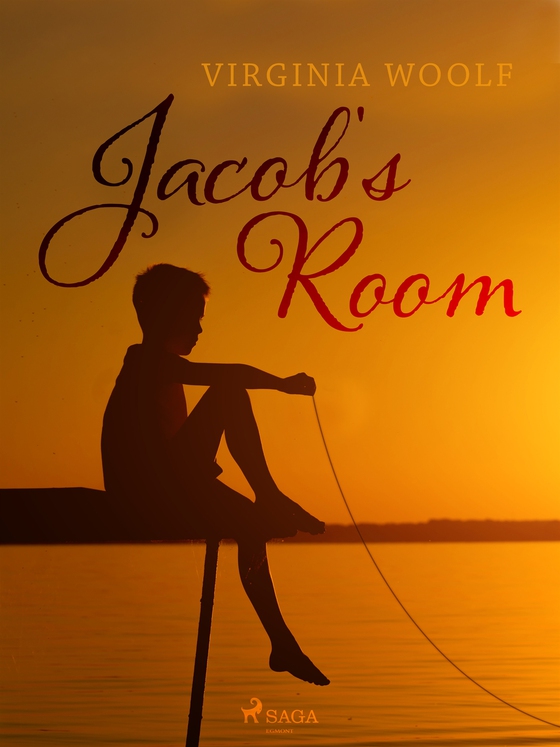
Jacob's Room e-bok
139 kr
"I enjoy the spring more than the autumn now. One does, I think, as one gets older."
'Jacob's Room' (1922) is Virginia Woolf’s third novel and established her influence as a symbolic writer. It centres around the life of Jacob Flanders, a sensitive young man struggling to harmonise his admiration for Classical culture with the anarchic reality of contemporary society.
Written as a character st…
"I enjoy the spring more than the autumn now. One does, I think, as one gets older."
'Jacob's Room' (1922) is Virginia Woolf’s third novel and established her influence as a symbolic writer. It centres around the life of Jacob Flanders, a sensitive young man struggling to harmonise his admiration for Classical culture with the anarchic reality of contemporary society.
Written as a character study of Flanders, the novel is built upon the impressions of those who inhabit his world - mostly women who fall helplessly in love with him.
By frequently making use of colour references, Woolf paints a vivid picture of the characters and the surroundings creating a painting-like narrative of the novel itself.
'Jacob's Room' is written in a stream-of-consciousness-like style and - of which Woolf was a pioneer - is experimental in its form and rhythm, separating it from Wolf’s usual writing style and making it an inherently experimental piece of literature.
Adeline Virginia Woolf (1882-1941) was an English writer who, despite growing up in a progressive household, was not allowed an education. When she and her sister moved in with their brothers in a rough London neighborhood, they joined the infamous The Bloomsbury Group, which debated philosophy, art and politics. Woolf's most famous novels include 'Mrs Dalloway' (1925) and 'To the Lighthouse' (1927).
E-bok
139 kr
Förlag
Saga Egmont
Längd
112 sidor
Genrer
Skönlitteratur, Romaner
Språk
English
Format
epub
Kopieringsskydd
Vattenmärkt
ISBN
9788726606898
"I enjoy the spring more than the autumn now. One does, I think, as one gets older."
'Jacob's Room' (1922) is Virginia Woolf’s third novel and established her influence as a symbolic writer. It centres around the life of Jacob Flanders, a sensitive young man struggling to harmonise his admiration for Classical culture with the anarchic reality of contemporary society.
Written as a character study of Flanders, the novel is built upon the impressions of those who inhabit his world - mostly women who fall helplessly in love with him.
By frequently making use of colour references, Woolf paints a vivid picture of the characters and the surroundings creating a painting-like narrative of the novel itself.
'Jacob's Room' is written in a stream-of-consciousness-like style and - of which Woolf was a pioneer - is experimental in its form and rhythm, separating it from Wolf’s usual writing style and making it an inherently experimental piece of literature.
Adeline Virginia Woolf (1882-1941) was an English writer who, despite growing up in a progressive household, was not allowed an education. When she and her sister moved in with their brothers in a rough London neighborhood, they joined the infamous The Bloomsbury Group, which debated philosophy, art and politics. Woolf's most famous novels include 'Mrs Dalloway' (1925) and 'To the Lighthouse' (1927).
Inga recensioner än