

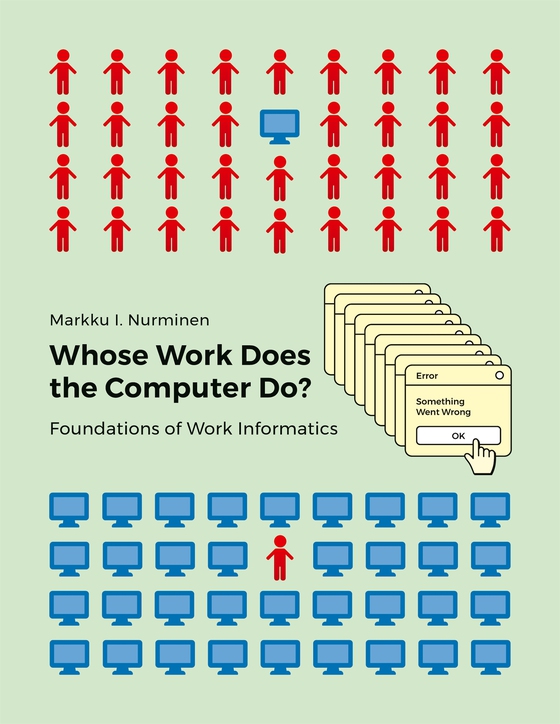
Whose Work Does the Computer Do?: Foundations of Work Informatics e-bok
185 kr
In this book, which belongs to the field of Information Systems Research, work informatics refers extensively to information technology and information systems. Its point of departure, however, is work itself, while technology must settle for playing the role of being a tool. The goal of an information system thus lies outside itself - in the goal-oriented activities of an organization. In work i…
In this book, which belongs to the field of Information Systems Research, work informatics refers extensively to information technology and information systems. Its point of departure, however, is work itself, while technology must settle for playing the role of being a tool. The goal of an information system thus lies outside itself - in the goal-oriented activities of an organization. In work informatics, work takes on three faces: individual work, collaboration, and services. For its part, information technology combines to serve all of these.
The case studies provided by the Laboris research group underline the descriptive and explanatory power of work informatics. The collection of Laboris accounts takes its structure from a selected set of theoretical and conceptual frameworks, most of them drawn from the human sciences. Work informatics sheds new light on agility, a goal pursued by many organizations. It also helps actual knowledge workers - individuals and groups - to grasp the silent and invisible questions of internal working life, which, given their nature, often seem to escape even the slightest touch.
E-bok
185 kr





Förlag
Books on Demand
Utgiven
19.02.2026
Längd
324 sidor
Genrer
It & Teknologi
Språk
English
Format
epub
Kopieringsskydd
Vattenmärkt
ISBN
9789528986805
In this book, which belongs to the field of Information Systems Research, work informatics refers extensively to information technology and information systems. Its point of departure, however, is work itself, while technology must settle for playing the role of being a tool. The goal of an information system thus lies outside itself - in the goal-oriented activities of an organization. In work informatics, work takes on three faces: individual work, collaboration, and services. For its part, information technology combines to serve all of these.
The case studies provided by the Laboris research group underline the descriptive and explanatory power of work informatics. The collection of Laboris accounts takes its structure from a selected set of theoretical and conceptual frameworks, most of them drawn from the human sciences. Work informatics sheds new light on agility, a goal pursued by many organizations. It also helps actual knowledge workers - individuals and groups - to grasp the silent and invisible questions of internal working life, which, given their nature, often seem to escape even the slightest touch.
Inga recensioner än