

Magnus Fröberg
(författare)
,
Erik Montemartillo Nellström
(författare)
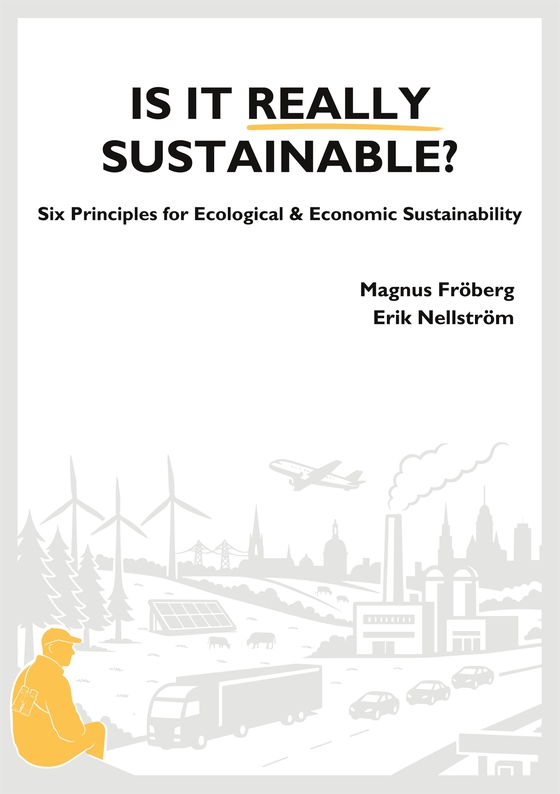
Is It Really Sustainable?: Six Principles for Ecological & Economic Sustainability e-bok
229 kr
Electricity generation, buildings, transport and industry are sectors that handle large amounts of energy and materials, and therefore have a major impact on climate and the environment. This book examines how companies in these areas can transition to ecological sustainability without compromising profitability. The point of departure is six principles for ecological and economic sustainability,…
Electricity generation, buildings, transport and industry are sectors that handle large amounts of energy and materials, and therefore have a major impact on climate and the environment. This book examines how companies in these areas can transition to ecological sustainability without compromising profitability. The point of departure is six principles for ecological and economic sustainability, illustrated with concrete examples.
Among the questions discussed are: Where is all the fossil-free energy supposed to come from? Can you really buy 'green' electricity in a power system that in practice still contains fossil-fuelled generation? Are trucks running on biofuels cheaper to buy and operate than battery-electric trucks? Should houses primarily be built from wood? How can concrete and plastics be produced and recycled in the future? Will critical metals be sufficient?
The book is aimed at anyone who wants to understand the ecological and economic dimensions of sustainability - professionals working in product development, environmental management and strategy, as well as policymakers, civil servants, students and others who want to deepen their understanding of sustainable technologies of the future.
E-bok
229 kr
Förlag
Books on Demand
Utgiven
01.07.2026
Längd
364 sidor
Genrer
It & Teknologi, Naturvetenskap & Teknik
Språk
Swedish
Format
epub
Kopieringsskydd
Vattenmärkt
ISBN
9789181503784
Electricity generation, buildings, transport and industry are sectors that handle large amounts of energy and materials, and therefore have a major impact on climate and the environment. This book examines how companies in these areas can transition to ecological sustainability without compromising profitability. The point of departure is six principles for ecological and economic sustainability, illustrated with concrete examples.
Among the questions discussed are: Where is all the fossil-free energy supposed to come from? Can you really buy 'green' electricity in a power system that in practice still contains fossil-fuelled generation? Are trucks running on biofuels cheaper to buy and operate than battery-electric trucks? Should houses primarily be built from wood? How can concrete and plastics be produced and recycled in the future? Will critical metals be sufficient?
The book is aimed at anyone who wants to understand the ecological and economic dimensions of sustainability - professionals working in product development, environmental management and strategy, as well as policymakers, civil servants, students and others who want to deepen their understanding of sustainable technologies of the future.
Inga recensioner än